
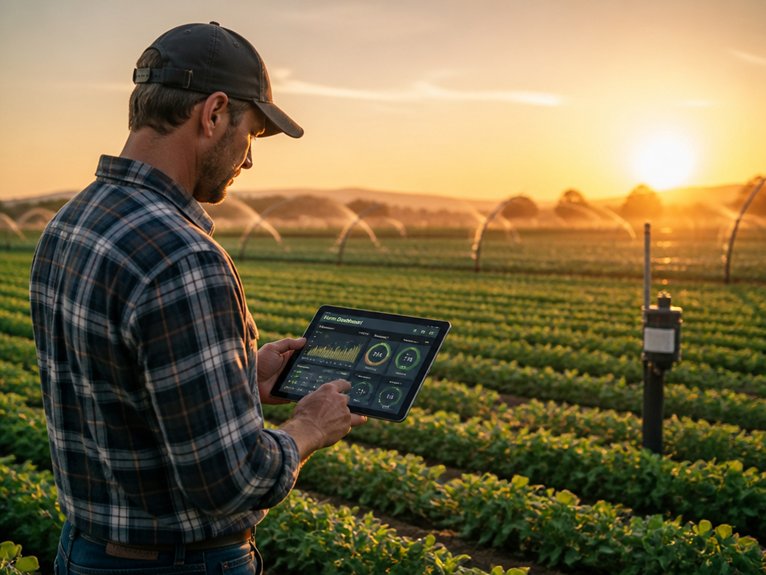
It’s easy to imagine a farmer checking a phone at sunrise instead of walking the fields. That quiet moment captures how much agriculture has changed. Sensors now nestle in the soil, quietly measuring moisture and nutrients while drones map crop health from above. These tools let farmers make precise decisions about when to water and fertilize, replacing guesswork with real-time data.
Standing at the edge of a modern farm, you might notice how peaceful it feels. The technology works invisibly, but the results are impossible to miss. Crop yields have climbed steadily, and the careful management means less water wasted and fewer chemicals drifting into nearby streams. For anyone who cares about sustainable food, that’s genuinely encouraging news.
Still, transformation isn’t simple. The upfront costs can stagger smaller operations, and learning to trust algorithms over generations of farming wisdom takes patience.
Technical hiccups arrive at the worst moments, like during harvest when every hour matters. The benefits are real, but they demand thoughtful planning and resources that not everyone can access easily.
Smart Farming Explained: Definition and Why It Matters
The evolution of agriculture now includes digital tools, sensors, and data analysis. Smart farming uses technology to monitor crops, soil conditions, and weather patterns in real time.
Farmers gain precise information about their fields. Cameras, drones, and ground sensors collect data continuously. This steady stream of insights helps them understand exactly what is happening across their land.
Why Smart Farming Matters
This approach increases crop yields and reduces water waste. It also lowers costs. Farmers apply fertilizers and pesticides only where needed. This minimizes environmental impact.
Technology alerts producers to problems early. Pest issues, disease outbreaks, or irrigation failures surface before they become severe. Quick action saves both time and money.
Better Decisions, Better Results
Smart farming improves decision-making. Farmers no longer guess about planting times or harvest readiness. They rely on actual field data instead.
Companies like John Deere and Climate FieldView show this in action. Their equipment and software integration optimizes farm operations with ease.
The Technology Stack: AI, Sensors, Drones, and Data Analytics
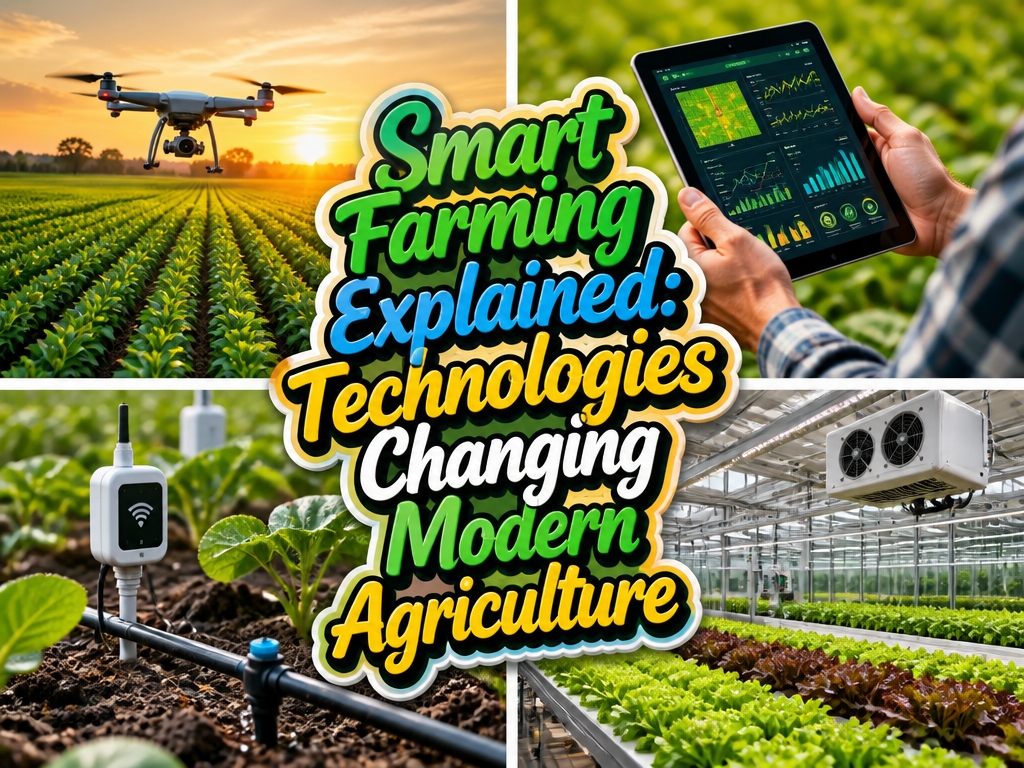
Smart farming runs on connected technologies. Soil sensors track moisture, temperature, and nutrients. They send this data to central systems in real time.
Drones fly over fields with cameras. They spot crop health issues and irrigation needs from above. AI then steps in to analyze all this information. It finds patterns that farmers might overlook on their own.
Machine learning predicts problems before they happen. It forecasts pest outbreaks, disease spread, and the best time to harvest. Data platforms pull everything together into clear, actionable steps.
GPS-guided tractors use these insights for precise planting and fertilizing. This cuts down on waste significantly. Weather stations add local conditions and forecasts to the mix.
These tools work as a team. Farmers get better information for managing resources. The result is higher yields and less environmental impact.
How Sensors and Data Optimize Crop Management
Countless sensors now sit in fields across the growing season. They gather details on soil conditions, moisture, and plant health. These devices send data continuously to farm management systems.
Farmers can make informed decisions quickly with this steady stream of information.
Soil moisture sensors pinpoint the ideal time to irrigate. This cuts water waste while keeping crops productive. Temperature and humidity sensors track conditions that affect disease and pests.
Multispectral cameras catch nutrient deficiencies early. They analyze subtle color changes in plants. Farmers can then apply fertilizer exactly where needed.
Data analytics platforms process all this information. They spot patterns and predict crop yields. Alerts reach farmers when conditions demand attention, like excessive moisture or pest sightings.
This sensor-driven approach removes guesswork from daily decisions. It lowers input costs and boosts farm efficiency through precise, evidence-based management.
Drones and Automation in Action: From Monitoring to Decisions
Sensors work well from fixed spots. Drones go further. They cover whole fields with speed and flexibility.
These flying tools carry cameras and multispectral sensors. They spot crop health issues, irrigation problems, and pest infestations across large areas. Work that once took days now finishes in hours.
AI processes the imagery from these flights. It finds patterns humans might miss. Farmers get clear, useful guidance. They learn which zones need treatment. They discover ideal harvest timing. They see how to allocate resources better.
Robotic harvesters and sprayers follow through on these insights. They act on the data directly.
This pairing of aerial monitoring and automation brings real benefits. Labor needs drop. Chemical waste shrinks. Crop yields rise through precise, well-timed interventions.
Real-World Results: Better Yields, Lower Water Waste, Higher Profits
Drones, AI analysis, and robotic systems deliver real results on working farms. Farmers using precision irrigation cut water use by 20-30%. That adds up fast in drought-prone areas.
AI-guided fertilizer application boosts crop yields by 10-15% compared to spreading fertilizer evenly. John Deere and Climate FieldView have tracked these gains across thousands of farms.
Profit margins grow in two ways. Input costs drop, and harvests grow larger. An Iowa corn farm cut pesticide use by 25% without sacrificing output. Some vegetable growers now skip herbicide costs entirely using robotic weeders.
Lower expenses. Less environmental impact. More production. These proven benefits explain why more farmers across North America and Europe are making the switch each year.
Starting Your Smart Farm: Costs, Barriers, and First Steps
Smart farming can feel out of reach for many operations. The price tag is steep. Initial costs run from $50,000 to $500,000 based on your farm size and what you’re hoping to achieve. Soil sensors, weather stations, and drones all demand serious upfront money.
Start by looking at what already works and what doesn’t. Pinpoint your specific headaches first. Water management needs different tools than crop monitoring or boosting yields. Check with agricultural departments for grants and cost-sharing programs. These can soften the blow.
Run a small pilot on just part of your land. Test the waters before committing fully. Talk to your extension office or neighboring farms who’ve made the leap. They’ve been through it and know the real story.
Staff training takes time and money. Skip it and your investment suffers. Put in the effort early and your systems actually work when it counts.
Frequently Asked Questions
What Are the Environmental Impacts of Smart Farming on Soil Health and Biodiversity?
Smart farming enhances soil health through precision nutrient application and reduced chemical use, minimizing contamination. It promotes biodiversity by enabling targeted pest management, decreasing pesticide dependency, and preserving beneficial organisms while optimizing land use efficiency.
How Does Smart Farming Technology Integrate With Existing Farm Equipment and Legacy Systems?
Smart farming technology integrates with existing farm equipment through retrofit sensors, compatible software platforms, and standardized data protocols. Legacy systems connect via middleware solutions, allowing farmers to gradually adopt precision agriculture without complete equipment replacement.
What Training or Education Do Farmers Need to Effectively Use Smart Farming Technologies?
Farmers require training in data interpretation, software operation, sensor management, and cybersecurity basics. Educational programs through agricultural extension services, equipment manufacturers, and online courses provide foundational knowledge for technology adoption and optimization.
Are There Regulatory or Compliance Requirements for Smart Farming Data Collection and Usage?
Smart farming operations face evolving regulatory requirements including data privacy laws, environmental compliance standards, and pesticide application regulations. Farmers must comply with GDPR, CCPA, and local agricultural oversight bodies governing sensor deployment and information management.
How Does Smart Farming Technology Perform in Developing Countries With Limited Infrastructure?
In Kenya, farmers using solar-powered soil sensors increased crop yields despite unreliable electricity. Smart farming adapts through low-cost, offline-capable devices requiring minimal infrastructure, enabling productivity gains in resource-limited regions.
Conclusion
Smart farming integrates sensors, drones, and AI to optimize agricultural operations, reducing water use, chemical inputs, and costs while increasing yields. Farmers monitoring soil moisture, weather patterns, and crop health in real time make faster, better decisions. What could farms accomplish with data-driven precision at every stage? Implementation requires upfront investment, yet long-term sustainability and profitability gains justify adoption for modern agricultural operations.