
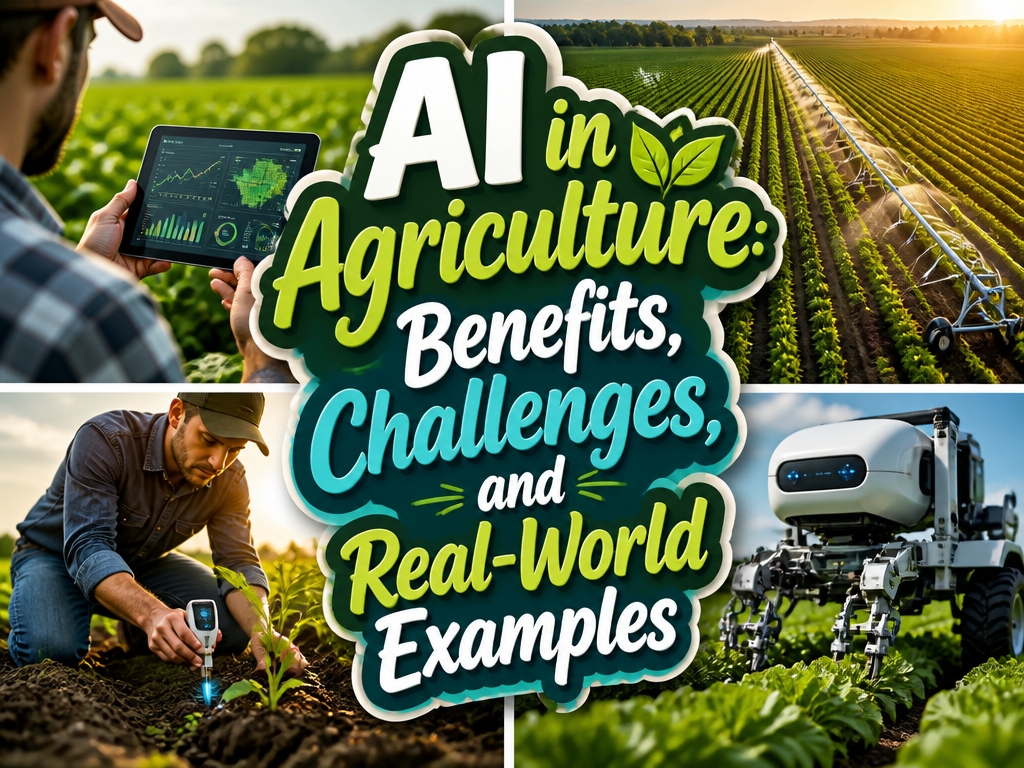
Dawn breaks over fields where tractors now navigate themselves. Farmers once guided every row by hand; today, algorithms calculate seed depth and soil moisture in real time. This shift toward AI-driven agriculture promises to reshape how we grow food, though the transition remains uneven and complex.
The promise is tangible. Precision systems trim water waste by targeting irrigation exactly where crops need it. Machine learning models flag disease outbreaks before visible symptoms spread. Autonomous harvesters run through the night, filling gaps in seasonal labor. For operations that can afford the investment, margins improve and environmental footprints shrink.
Still, the math doesn’t work for everyone. A single sensor array can cost more than a year’s profit for small family farms. Spotty rural broadband leaves remote fields disconnected when connectivity matters most. Older workers, steeped in generations of intuitive knowledge, often distrust screens that override their judgment.
The technology exists; the infrastructure and training frequently do not.
What separates successful adoption from expensive failure? It tends to be patience: starting small with test plots, building local technical support, choosing tools that solve specific headaches rather than chasing novelty.
Progress in agricultural AI won’t come from sweeping transformation, but from farmers finding one reliable win, then another.
The Real Barriers: Why Farmers Aren’t Adopting AI Yet
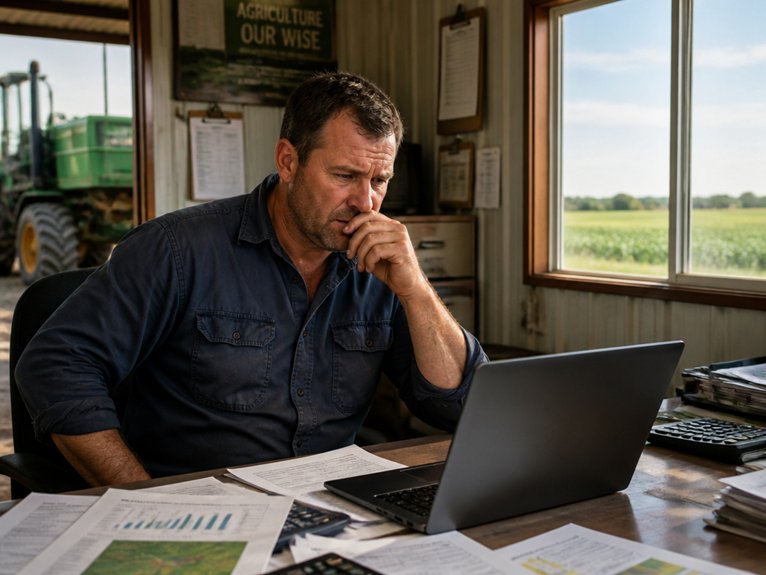
What’s Really Holding Farmers Back
Resistance to agricultural AI comes from practical problems, not fear of new ideas. High costs top the list. AI systems demand serious capital that many farms simply lack.
Rural internet often falls short too. Cloud-based platforms need steady data transmission, and that infrastructure isn’t always there.
Farmers also face a skills gap. Complex software requires training, but local support services are hard to find. When something breaks, help might be hours away.
The Daily Challenges
Equipment mismatches create headaches. New AI tools sometimes refuse to talk to machines farmers already own. Nobody wants to replace a working tractor for a software upgrade.
Privacy weighs heavily as well. Sharing operational data with tech companies feels risky to many landowners.
Time is the final crunch. Training happens during planting or harvest. Those seasons leave no room for long classroom sessions.
These real obstacles explain slow adoption far better than assumptions about stubbornness.
How AI Cuts Costs and Boosts Yields (When It Works)
AI systems deliver real financial returns once farmers clear the initial hurdles. The technology excels at precision resource management and targeted yield improvements.
Machine learning algorithms analyze soil conditions, weather patterns, and plant health data. They then optimize irrigation schedules with great accuracy. Water usage typically drops by 20-30 percent. Crop productivity stays steady or improves.
Predictive analytics spot pest outbreaks early. Farmers can apply pesticides exactly where needed. This replaces expensive blanket spraying across entire fields. Chemical costs fall considerably as a result.
Crop yield forecasting helps farmers plan better. Harvesting timelines become more strategic. Market sales can be timed for stronger prices.
Autonomous tractors and drones cut fuel consumption. They also reduce labor expenses significantly.
Case studies from corn and wheat operations show solid numbers. Net savings range from $15 to $40 per acre annually. These benefits grow over multiple growing seasons. Most operations recover their initial AI investment within 2 to 4 years.
Stop Disease Before It Spreads: Early Detection in Action
Seeing Trouble Before It Shows
AI-powered imaging spots crop diseases days before symptoms appear. Cameras and sensors pick up subtle color shifts, texture changes, and early biochemical signals. Farmers get mobile alerts right away. They can step in before trouble spreads across entire fields.
Smart Tools for Smart Farms
Computer vision algorithms study millions of plant images. They learn patterns linked to threats like powdery mildew, blight, and rust. This knowledge powers faster, more accurate diagnoses than human scouting alone.
Real Results in Real Fields
Vineyards use AI to watch grapevines for fungal problems. Wheat growers turn to thermal imaging to find stressed plants. Both methods catch issues early.
Targeted action cuts pesticide use significantly. Farmers treat only when and where needed. This saves money on chemicals, prevents crop losses, and keeps farms running smoothly.
Cut Labor Costs With Drones and Self-Driving Equipment
Drones and self-driving tractors now handle jobs that once needed large crews. These machines cut labor costs during planting, spraying, and harvesting.
Autonomous equipment runs nonstop across big fields. It never gets tired. Drones fly overhead with cameras and sensors to check crop health.
Major manufacturers like John Deere and AGCO build GPS-guided tractors. Drones with multispectral imaging spot problem areas quickly.
This automation lowers per-acre labor costs significantly. Operators still watch performance remotely, but far fewer people are needed on the ground.
Upfront costs can be steep. Smaller farms may struggle with the initial investment.
Large operations see the biggest payoff. Savings add up across thousands of acres. For them, mechanization beats traditional manual labor.
How John Deere and Climate FieldView Lead the Way
John Deere and Climate FieldView are changing how farmers work with agricultural data. These platforms put powerful tools into growers’ hands.
John Deere’s Operations Center brings together equipment data, soil details, and weather forecasts. Farmers can check field conditions from anywhere. This remote access saves time and helps with quick decision making.
Climate FieldView, from Bayer, offers satellite imagery and predictive analytics. It helps growers assess crop health and optimize yields. The platform spots issues before they become costly problems.
Both systems use machine learning to detect pest outbreaks, nutrient gaps, and irrigation needs. This technology works across large farming operations with impressive accuracy.
Farmers see real benefits from these tools. Input costs drop when fertilizers and pesticides go exactly where needed. Real-time data paired with autonomous equipment boosts efficiency. Operational expenses fall while productivity stays strong. Environmental stewardship improves too, even across diverse farming setups.
The True Cost of AI: What You’ll Actually Spend
Advanced farming tools like John Deere’s Operations Center and Climate FieldView can boost your bottom line. Still, it pays to know what you’ll actually spend before jumping in.
Software subscriptions start at $500 per year. Prices climb to $2,000 based on your farm size and the features you pick.
Hardware is another consideration. Sensors and connectivity gear run between $5,000 and $15,000 to get started.
Training your team takes both time and money. Factor this into your budget from day one.
Data storage adds ongoing costs too. Most farmers pay $50 to $200 each month.
Connecting new tools with your existing equipment may bring extra fees. Annual renewals and software updates also stack up over time.
Smaller farms often feel the pinch of these layered expenses. Larger operations spread the same costs across more acres, making each acre cheaper to support.
Start Small: Your First Steps Into Farm AI
The best approach to adopting farm AI is starting small. Pick one tool instead of overhauling your entire operation.
Soil sensors make an excellent first choice. They monitor moisture and nutrient levels, then feed data straight to your irrigation system.
Drone technology offers another simple entry point. You can survey crop health across large fields and catch problem areas early.
Weather prediction software works well too. It delivers localized forecasts to guide your planting and harvesting timing.
Starting with one tool lets you learn the system. You will understand the data outputs and see real returns on investment.
Once you feel comfortable, add more AI solutions gradually. This measured approach keeps financial risk low. It also builds your team’s expertise and confidence with new technology.
Frequently Asked Questions
What Specific AI Technologies Are Most Suitable for Small-Scale Farming Operations?
Small-scale farming operations benefit most from affordable AI technologies: mobile crop monitoring apps, weather prediction software, soil analysis tools, and automated irrigation systems. These solutions require minimal infrastructure while delivering significant productivity improvements cost-effectively.
How Does AI Integration Affect Long-Term Soil Health and Sustainability Practices?
The theory that AI monitoring enhances soil sustainability proves valid. AI-driven sensors track soil composition, moisture, and nutrient levels, enabling precise interventions that reduce chemical inputs, minimize erosion, and preserve microbial ecosystems long-term.
What Data Privacy Concerns Exist When Using Cloud-Based Agricultural AI Platforms?
Cloud-based agricultural AI platforms raise concerns about data ownership, unauthorized access to sensitive farm information, potential breaches exposing operational details, compliance with data protection regulations, and third-party vendor security vulnerabilities threatening farmer privacy.
Can AI Systems Work Effectively in Regions With Poor Internet Connectivity?
AI systems function in low-connectivity regions through edge computing and offline-capable models. Farmers can process data locally on devices, synchronizing when connections become available, making AI deployment feasible despite infrastructure limitations.
How Do Regulatory Requirements Differ for AI Use Across Various Countries?
Regulatory frameworks for AI vary considerably across nations. The EU emphasizes strict data protection through GDPR, while the US adopts lighter oversight. China implements state-controlled standards, and developing nations often lack extensive AI legislation entirely.
Conclusion
Farmers face genuine barriers to AI adoption, namely high costs, poor internet connectivity, and insufficient technical training. Coincidentally, the same companies addressing these challenges—John Deere, Climate FieldView—demonstrate AI’s measurable returns through disease detection and autonomous equipment. Starting with modest implementations reduces financial risk while building necessary expertise. Success requires matching technology scale to farm size, available infrastructure, and operator capability, ensuring sustainable long-term integration.