
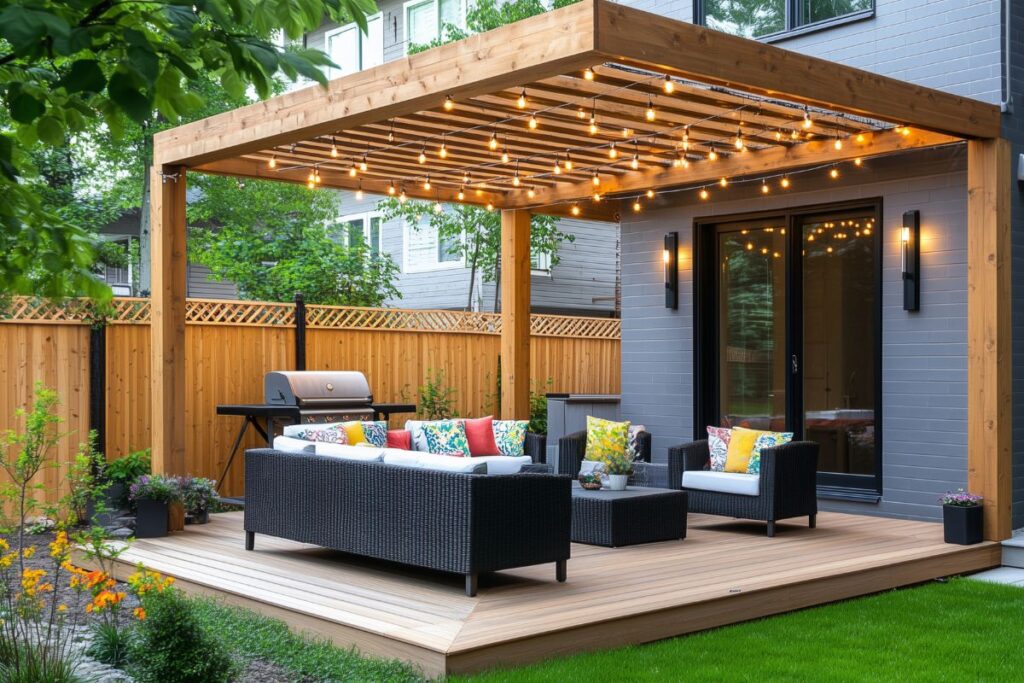
Most backyards have one dead zone. It might be the patch of patio that turns into a griddle by two in the afternoon, or the stretch of lawn that feels too open to actually sit in. A pergola solves that faster than almost anything else you can add, and it does it without the permit headaches of a full roof.
Timber is still the material most people land on, and not only for looks. It handles temperature swing better than aluminium, it takes stain and paint, and it can be cut and adjusted on site when your patio turns out to be an inch off square. The tradeoff is that timber asks you to make a few decisions correctly at the start.
Here is what actually matters.
Why timber holds up against metal and vinyl
Aluminium kits go up fast and the marketing leans hard on the maintenance angle. That case is real, but it skips a few things that show up once the structure is standing.
Wood earns its place for a handful of practical reasons:
- It stays cooler to the touch in direct summer sun, which matters if your posts sit next to a seating area
- It absorbs and releases moisture instead of dripping condensation onto your furniture
- It can be trimmed, notched, and shimmed on site, so a slightly out of level slab is not a project killer
- It takes climbing plants without the fasteners chewing through a powder coated finish
- It ages into something. A ten year old cedar pergola looks intentional. A ten year old vinyl one looks tired.
None of that means metal is wrong. It means the two are not interchangeable, and price alone is a poor way to choose.
Matching the wood to your weather
This is the decision that determines whether you are refinishing in year three or year eight. Climate does more damage than use does, so start with what your winters and summers actually do.
Cedar and redwood
Western red cedar is the default for good reason. The natural oils resist rot and insects without treatment, it stays dimensionally stable through freeze and thaw cycles, and it is light enough that a two person crew can raise beams without equipment.
It is the right call if you get real winters, if you want to leave the wood unfinished and let it silver, or if you plan to stain rather than paint.
Pressure treated pine
Treated pine costs less and carries load well, which makes it attractive for larger spans. The catch is movement. Fresh treated lumber holds a lot of moisture and will twist as it dries, so it needs to sit stickered and covered for several weeks before you build with it.
Choose it if budget is the binding constraint and you are willing to over fasten and check the structure after the first season.
Modified and engineered timber
Acetylated woods and thermally modified species sit at the top of the price range and behave almost like a composite. Very little movement, very long service life, and a price that only makes sense on a structure you intend to keep for decades.
Getting the dimensions right
Undersized pergolas are the most common mistake, and the fix is not cheap once the posts are set in concrete.
Before you order anything, settle these numbers:
- Post height. Eight feet clear underneath is the practical minimum. Nine or ten feet feels far better on anything wider than twelve feet, because a low header on a wide structure reads as a cave.
- Span between posts. Ten to twelve feet is comfortable for standard beam sizes. Push past that and you need deeper beams, not just longer ones.
- Rafter spacing. Twelve to sixteen inches on centre gives you real shade at midday. Twenty four inches gives you a frame and very little relief.
- Overhang. Let rafters run twelve to eighteen inches past the beams. It costs almost nothing and it is the difference between a finished structure and a box.
Also think about where the sun sits at four in the afternoon, not at noon. That is when you will actually be out there.
Kits versus building from scratch
Cutting your own from raw lumber gives you full control and usually saves money on materials, but it assumes you have a mitre saw, a helper, and a free weekend or three.
Kits arrive with the joinery already cut, hardware matched to the timber, and a span rating the manufacturer stands behind. For most homeowners that is the better trade, particularly because the engineering on the beam to post connection is the part that is easy to get quietly wrong.
Where to order, and why the border matters
Freight is the hidden cost in this category. A pergola kit is a heavy, oversized pallet, and shipping one across the border turns a good price into a bad one once duties, brokerage, and oversize freight surcharges land. Ordering from a supplier that stocks and ships domestically is almost always cheaper than chasing a lower sticker price on the other side.
Ordering in the United States
If you are building in the US, look at the Norweh timber pergola USA range, which ships domestically and is sized against North American lumber dimensions rather than metric stock. That last detail matters more than it sounds, because mixing metric and imperial sections is how you end up shimming every joint.
Ordering in Canada
For Canadian builds, the Norweh timber pergola Canada option keeps the order inside the country and avoids customs entirely. It also means replacement parts and hardware come from a domestic warehouse if you need them in year two, which is worth more than most people expect.
Permits, setbacks, and the part everyone skips
Rules vary by municipality, but the pattern is consistent. Open roofed structures below a certain height and footprint are usually exempt, while anything attached to the house, anything over roughly ten feet tall, or anything sitting inside a setback line will need a permit.
Call before you dig. Utility locates are free almost everywhere, and hitting a service line with a post hole auger is an expensive afternoon.
Keeping it looking good
Year one is the year that decides everything. Seal the end grain on every cut, including the tops of posts, because that is where water gets in. After that, a wash each spring and a fresh coat of penetrating oil every two to three years is enough for cedar. Painted structures need more attention at the joints, where film finishes crack first.
If you want the weathered grey look, skip the finish entirely on cedar. Just keep the tops sealed anyway, since that has nothing to do with appearance and everything to do with how long the posts last.
Frequently asked questions
How long does a timber pergola last? Cedar with basic maintenance runs twenty years or more. Treated pine sits closer to fifteen. Modified timber can outlast the fence around it.
Can a pergola be attached to the house? Yes, using a ledger board flashed into the wall. This almost always triggers a permit requirement, and flashing done poorly is a water intrusion problem, so it is worth doing properly.
Does a pergola actually provide shade? With rafters at twelve to sixteen inch spacing, yes, through the middle of the day. For full coverage you need a shade sail, retractable canopy, or a few seasons of climbing growth.