

The morning dew still clings to the soybean leaves when you first notice the pivot isn’t running. A quick check of your phone confirms what the soil sensor suggested: that corner field is holding moisture just fine.
Small moments like this quietly reshape how modern farming gets done.
Most growers sense the squeeze, input costs climbing while commodity prices play their usual games. Soil moisture sensors, disciplined field scouting, smart timing on purchases, these tools trim the fat without touching the yield.
Still, plenty of farmers hesitate, worried that cutting back means giving something up.
There’s a real difference between trimming waste and starving your crop. Data helps you see which is which. The best strategies protect both your wallet and your soil’s future, though some shortcuts only hide their true cost until the next growing season.
Diagnose Your Biggest Cost Drains With Farm Data
Start With the Facts
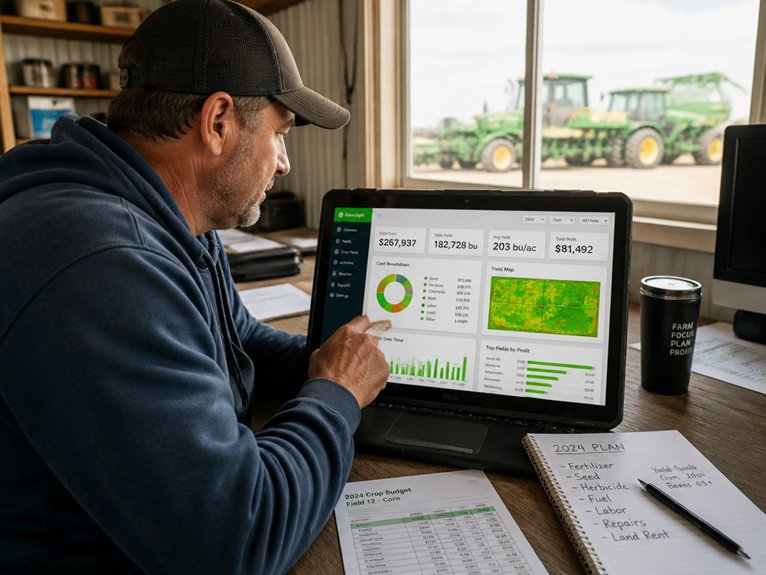
Cost assumptions often miss the mark. Farmers need real numbers to find their biggest expenses.
Farm management software tracks spending across your operation. It shows where money actually goes instead of where you think it goes.
Find Your Hidden Drains
Detailed records reveal surprising patterns. Fuel, labor, fertilizer, equipment, and irrigation costs add up differently than expected.
One farmer discovered equipment repairs cost more than fertilizer. Another found irrigation was the silent budget killer. Data exposes these truths.
Turn Insight Into Action
Previous seasons create useful benchmarks. Compare current spending to past performance. Target the highest costs first.
Accurate data leads to smarter cuts. Without it, you chase small savings while big drains continue.
Cut Irrigation Costs Without Losing Yield
Irrigation often represents the largest controllable expense on crop operations. Many producers still apply water using outdated methods or inefficient schedules.
Know When to Water
Soil moisture sensors detect water levels accurately. Farmers can irrigate only when necessary rather than sticking to fixed calendars.
Target Your Application
Drip irrigation systems deliver water directly to plant roots. This approach reduces waste compared to sprinkler methods.
Time It Right
Scheduling irrigation during cooler morning hours minimizes evaporation losses. Less water escapes into the air before reaching your crops.
Match Water to Your Field
Updating pivot systems with variable rate technology adjusts application across field zones. Soil type and topography guide where water goes.
Keep Equipment Running Smoothly
Regular maintenance prevents leaks and malfunctions that waste water. Small fixes now prevent bigger losses later.
These adjustments typically maintain or improve crop yields. You will also lower water consumption and associated energy costs considerably.
Stop Overspending on Fertilizer With Soil Testing
Know What Your Soil Actually Needs
Too much fertilizer wastes money without helping your crops. Soil testing tells you exactly which nutrients are already there. You can skip the guesswork with phosphorus, potassium, and nitrogen.
Many farmers spread fertilizer based on habit. That approach drains budgets fast. A simple test reveals what your field actually lacks.
Small Investment, Big Payoff
A soil test runs between $15 and $40 per sample. Compare that to the cost of excess fertilizer sitting unused. The results point you toward precise application rates.
You’ll keep yields steady while trimming spending. Most farmers who test regularly cut fertilizer costs by 10 to 20 percent each year.
Test on a Schedule
Not every field is the same. Different soil types need different nutrients. Testing every three to four years keeps your plan current.
You’ll apply only what’s necessary for healthy crops and stronger profits.
Replace Blanket Spraying With Targeted Pest Control
Blanket spraying kills every insect in a field. Helpful bugs die alongside harmful ones. You waste pesticide and money on pests that aren’t even there.
Targeted pest control works differently. It uses scouting and monitoring to find specific problem areas first. Then you treat only where needed.
Know Your Field
Walk your fields regularly. Check for pest populations as you go. Note the location and severity of any problems you find.
This data shows exactly where spraying is necessary. It also shows where you can skip treatment entirely. Some farmers use pheromone traps to track insect activity. Others rely on degree-day models to predict when pests will emerge.
Spot Treat With Precision
Treat only the affected zones. This reduces chemical use significantly. It also lowers your input costs.
GPS-guided sprayers apply pesticides with precision. They hit target areas directly and minimize waste. Watch the weather too. Timing applications for ideal conditions prevents do-overs. It also protects beneficial insects that control pests naturally.
Lower Fuel Costs Through Efficient Field Operations
Fuel costs add up quickly on any farm. Field preparation, planting, spraying, and harvest all require significant fuel. Small changes in how you work can lead to real savings.
Smart Planning Saves Fuel
Plan your routes carefully before heading out. Avoid overlapping passes that waste time and fuel. Cut down on idle time when equipment sits running but not working.
GPS technology keeps your lines straight. Curved or repeated paths burn extra fuel for no reason. Combine multiple tasks into single trips across the field when possible.
Equipment Matters
Keep your machinery in good shape. Check tire pressure regularly. Tune engines on schedule. Well-maintained equipment runs more efficiently.
Use lighter machines when the job allows. Less weight means less fuel burned. Consider no-till or reduced-till methods. Fewer passes through the field add up to lower fuel bills.
These practical steps trim costs without hurting your productivity.
Fix Equipment Before It Breaks: Not After
Preventive maintenance stretches equipment life. It also protects the fuel savings you gain through efficient field operations.
Regular inspections catch problems early. Worn belts, leaking hydraulics, and clogged filters get fixed before they cause breakdowns. Farmers who service tractors, combines, and planters on schedule avoid expensive repairs. They also skip the lost productivity that hits during critical planting or harvest windows.
Small Jobs Save Big Money
Oil changes, tire rotations, and bearing replacements cost far less than new engines or transmissions. Maintaining proper tire pressure cuts fuel consumption. It also prevents sudden failures in the field.
Track and Plan
A maintenance log helps you spot patterns. Record service dates and repair costs. Use this to budget ahead. Equipment that runs well uses less fuel and finishes tasks faster. That lowers your operational expenses while keeping yields steady.
Build Soil Health to Reduce Input Dependency
Healthy soil cuts farming costs. Plants pull nutrients from organic matter more easily. This means less money spent on fertilizers, pesticides, and irrigation.
Farmers with rich soil skip many chemical amendments. Their crops thrive naturally.
—
Build Soil Health Step by Step
Add compost and manure to boost organic content. Rotate crops to keep nutrients balanced. Plant cover crops like clover or rye during off-seasons. Reduce tillage to protect soil structure and microbes.
These changes need patience. Results typically show in one to three years.
—
The Payoff
Long-term savings add up fast. Farmers see lower input bills yearly. Water stays in the soil longer during dry spells. Crop performance improves across the board.
Invest in your soil now. Expenses drop later. Productivity stays strong.
Plant Cover Crops for Savings That Compound
Build Healthier Soil Over Time
Cover crops give farmers a practical way to boost soil health. They also generate clear financial benefits.
Legumes like clover and alfalfa fix nitrogen in the soil. This cuts fertilizer purchases over time. Grasses such as rye prevent erosion and keep weeds down. Herbicide costs drop as a result.
Grow Between Seasons
These plants thrive during off-seasons. They need minimal inputs while improving soil structure and organic matter. Farmers notice fewer pests and less disease pressure in following seasons.
Watch Savings Multiply
The compounding effect is real. Initial planting costs shrink as soil quality rises and input needs fall.
Crop rotations with cover crops lift long-term productivity. Sustained savings come from reduced chemical use and better water retention in soil.
Catch Yield Problems Early With Real-Time Monitoring
Modern farming tools now let growers spot yield problems before they spread. Drones with multispectral cameras find stressed crops early. They detect color changes our eyes cannot see.
Soil moisture sensors placed throughout fields reveal irrigation issues fast. This prevents water waste and crop damage. Weather stations provide localized data about temperature, humidity, and rainfall patterns.
Real-time systems alert farmers the moment problems emerge. These include pest infestations, disease spread, and nutrient deficiencies. GPS-guided tractors paired with field software track equipment performance and fuel use.
Early detection allows targeted interventions. Farmers can skip expensive broad-field treatments. This precision approach minimizes losses and lowers input costs. Yields stay consistent without sacrificing quality.
Negotiate Better Input Prices by Buying Strategically
Strategic purchasing cuts farming expenses. Better prices on seeds, fertilizers, pesticides, and equipment are within reach.
Buy at the Right Time
Off-season purchases save money. Late fall and winter bring lower unit costs than spring. Suppliers also favor cash flow during harvest. That timing opens doors to better deals.
Create Competition
Multiple quotes matter. Comparing prices pushes suppliers to compete. Individual farmers gain leverage without the legwork.
Join Forces
Cooperative purchasing builds power. Pools of buyers unlock volume discounts. Single operations simply can’t match these rates alone.
Lock in Stability
Long-term contracts with trusted vendors protect against price swings. Growing seasons stay predictable. Budgets breathe easier.
The bottom line? Smarter buying protects profits. Crop quality stays intact. Farm health improves through better financial planning.
Frequently Asked Questions
How Long Does It Typically Take to See Cost Savings From Implementing These Strategies?
Most cost-reduction strategies in agriculture yield measurable savings within one to two growing seasons. However, soil health improvements and infrastructure investments typically require three to five years for full financial returns to materialize.
What Initial Investment Is Required to Adopt Farm Data Monitoring Technology?
Farm data monitoring technology requires initial investments ranging from $5,000 to $50,000, depending on farm size and system complexity. Costs include sensors, software subscriptions, installation, and training. Smaller operations may start with basic systems at lower price points.
Can Small Farms Realistically Apply These Cost-Reduction Methods Effectively?
Small farms can effectively apply cost-reduction methods, though they face challenges unlike medieval peasants with smartphones. Selective adoption of affordable technologies, cooperative resource sharing, and precision techniques prove viable for operations of modest scale.
Which Cost-Reduction Strategy Should Farmers Prioritize if Resources Are Limited?
Farmers with limited resources should prioritize soil health management and precision irrigation, as these strategies yield maximum cost savings while simultaneously improving yields through efficient nutrient retention and water conservation practices.
How Do Weather Fluctuations Impact the Effectiveness of These Cost-Saving Techniques?
Weather fluctuations act as a double-edged sword on cost-saving techniques. Drought reduces irrigation savings, excessive rain diminishes fertilizer efficiency, and temperature extremes compromise pest management strategies, forcing farmers to increase spending despite implemented measures.
Conclusion
Farmers fundamentally benefit by bundling these balanced, budget-conscious approaches, combining soil sensors, strategic spraying, and savvy purchasing practices. By systematically scrutinizing spending, farmers sustainably slash costs while safeguarding yields. These straightforward strategies, supported by solid data and sound soil science, substantially strengthen farm finances. Properly practiced, precision agriculture produces profitable, productive operations without performance penalties.