
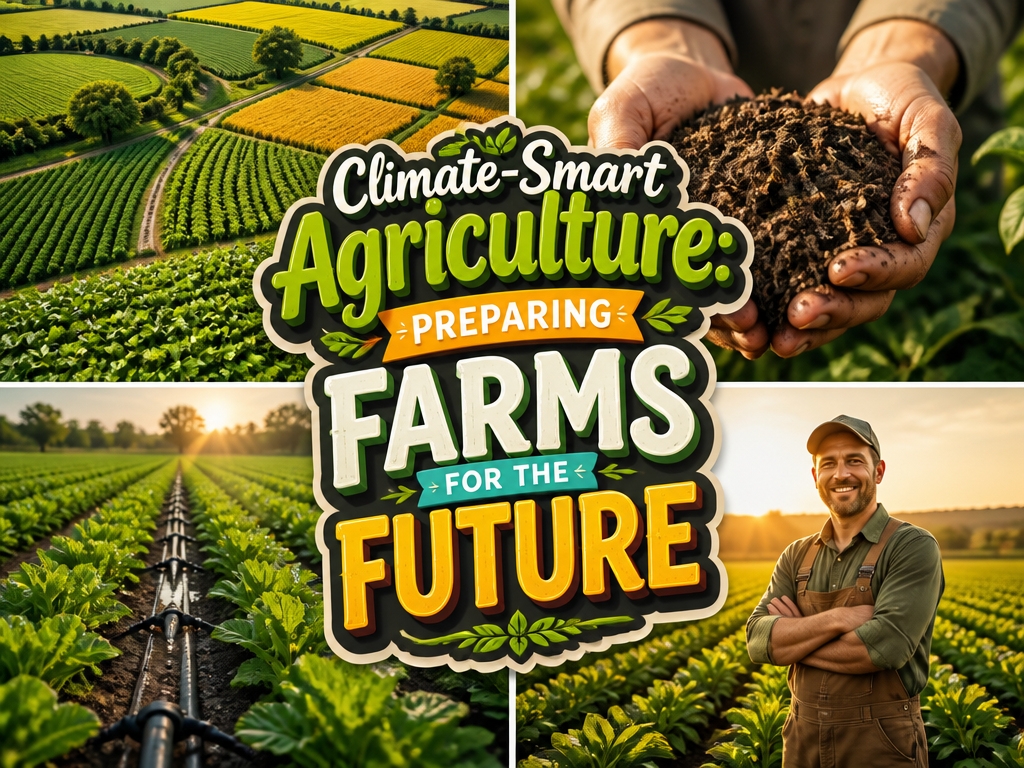
Early morning dew still clings to the fields when many farmers are already walking their land with new questions in mind. How do we grow enough when the weather turns unpredictable? Climate-smart agriculture offers real answers by weaving together practices old and new—crop rotations that build living soil, sensors that read exactly what crops need, and water systems that waste nothing. The goal isn’t perfection overnight but steady steps that make sense for each piece of ground.
There’s something quietly hopeful about watching a farm adapt rather than simply struggle against nature. You might see neighbors planting cover crops between seasons, not because someone demanded it, but because their fields hold moisture better and the soil feels different beneath their boots. These changes build resilience slowly, harvest by harvest, until extreme heat or sudden rain becomes more manageable than devastating.
Of course, no two farms carry the same possibilities. What works across the county road might not suit your soil type, budget, or labor.
The real work lies in sorting through options with clear eyes—knowing what you can afford to try, where the risks sit, and which practices will actually stick. When farmers choose wisely for their own conditions, the benefits reach further than anyone expected.
What Is Climate-Smart Agriculture?
What Is Climate-Smart Agriculture?
Building Better Farms
Climate-smart agriculture helps farmers grow more food while protecting the planet. It brings together old wisdom and new tools to solve big challenges.
Farmers use methods that boost their harvests. They also prepare for harsher weather and cut down on pollution. It’s about working smarter, not harder.
Practices That Work
Crop rotation keeps soil healthy and fertile. Conservation tillage helps the ground hold moisture and carbon. Agroforestry mixes trees with crops or animals for extra income and shade.
Water-saving tricks matter too. Drip irrigation sends water straight to roots. Rainwater catching helps farms survive dry spells. Small changes add up to big results.
Stronger Soils, Stronger Farms
Composting and cover crops put carbon back where it belongs. Living soil traps emissions underground. Healthier dirt grows better food with fewer chemicals.
Mixing up what you plant and raise spreads out risk. One bad season won’t wipe you out. Markets change, weather shifts, but diverse farms bounce back.
The Bottom Line
Climate-smart farming feeds people without wrecking the earth. It keeps rural communities thriving. Everyone wins when agriculture works with nature, not against it.
Five Practices That Cut Emissions and Protect Your Farm
Reducing farm emissions is possible with proven methods. These five approaches work together to lower greenhouse gas output while keeping your land productive.
Rotate Your Crops
Alternate plant types each year. This improves soil health naturally. You’ll also need less fertilizer over time.
Plant Cover Crops
Grow these during off-seasons. They prevent erosion and retain moisture. Nitrogen runoff decreases too.
Use Precision Agriculture
Technology helps apply water and inputs only where needed. Waste goes down. Costs often follow.
Try Conservation Tillage
Disturb soil less. This keeps carbon in the ground. Fuel use drops as well.
Move Livestock Regularly
Rotational grazing prevents overgrazing. Vegetation recovers faster. Pastures stay healthy longer.
Many farmers who adopt these methods see lower input costs alongside the environmental benefits.
Which Practice Should You Adopt First?
Which Practice Should You Adopt First?
Where should a farmer begin when five proven methods all offer benefits? The answer depends on each farm’s specific conditions, resources, and goals.
Start with a simple self-assessment. Look at your soil quality, water availability, and budget. This groundwork points you toward the right first step.
Degraded soil calls for cover cropping or conservation tillage. Water challenges? Try agroforestry or rotational grazing. Tight budgets favor practices needing little equipment.
Your local agricultural extension office offers guidance tailored to your region. Neighboring farms running climate-smart practices can show you what works in real conditions.
Pick one practice to begin. Learn its rhythms and demands. Add others only after you feel confident. This steady pace keeps risks low and builds real skill.
Water Management in Unpredictable Weather
Water availability shifts without warning. Seasons bring too much or too little rain. Farms need steady moisture for crops and animals. This uncertainty creates real challenges.
Storing Water for Dry Times
Rainwater harvesting helps farms ride out droughts. Ponds and cisterns collect excess water when it pours. That supply waits ready for parched months ahead.
Smart Irrigation Tools
Soil moisture sensors show exactly when fields need water. Farmers skip unnecessary watering. Drip irrigation sends water straight to roots. It wastes far less than sprinklers.
Keeping Moisture in the Ground
Mulch acts like a blanket for soil. Cover crops do the same. Both slow evaporation and hold water where plants can reach it.
Building Water Security
Relying on one source is risky. Groundwater wells back up surface water supplies. When one runs low, the other carries the farm through.
These approaches work together. They keep farms productive even when rainfall turns unpredictable.
Crop Diversity and Agroforestry for Long-Term Stability
Crop Diversity: A Safer Bet
Diverse farms face fewer risks than those relying on one crop. Growing multiple plants protects against pests, diseases, and price drops. Individual crops may fail, but others often thrive.
Agroforestry: Trees Meet Crops
Agroforestry blends trees with farming. This creates extra income and environmental benefits. Trees offer shade, stop erosion, and hold water during dry spells.
Two common systems work well. Alley cropping places crops between tree rows. Silvopasture mixes livestock with trees. Farmers might grow fruit trees near vegetables or grains.
Planning matters. Think through tree spacing, crop choices, and timing. These details shape long-term success.
Stability Over Time
Diverse farms grow stronger over years. They handle climate shifts and market swings with less stress. Resilience builds naturally when systems include variety.
Calculate Your ROI: Costs, Returns, and Funding
Building diverse farms and agroforestry systems takes upfront investment. Farmers gain the most by understanding the financial picture before planting.
Initial costs typically range from $500 to $2,000 per acre. These cover seedlings, soil preparation, equipment changes, and labor. The exact amount depends on the system you choose.
Returns build slowly over three to seven years. Trees need time to mature. Diversified crops start producing marketable yields at different points along the way.
Funding can come from several places. Government grants help offset startup costs. Agricultural loans spread payments across seasons. Carbon credit programs pay farmers directly for the climate benefits their trees provide.
To calculate ROI, track every expense. Compare these against projected harvests from timber, fruit, nuts, and your primary crops.
Get outside input before you commit. Extension agents know regional programs and realistic timelines. Financial advisors can spot gaps in your plan and point you toward funding suited to your farm size and location.
Navigate Barriers and Launch Your Transition Plan
Most farmers hit roadblocks when shifting to climate-smart practices. Planning ahead cuts down on surprises and keeps costs manageable.
Equipment costs can stretch budgets thin. Some soils need time to respond to new methods. Learning new techniques takes patience. Start by pinpointing which hurdles match your situation. Then map out a timeline that fits your reality.
Pick one practice to begin. Cover cropping works well. So does dialing back tillage. Resist the urge to flip your whole system overnight. Small steps build confidence and let you adjust course if needed.
Your local extension office is a goldmine. Staff there know your region and can point you toward farmers who’ve already made the leap. Many areas also run programs that ease the financial load. Grants, low-interest loans, and cost-share deals exist for farms moving in this direction.
Document where you stand now. Track soil health, water use, and current practices. These numbers become your baseline. They also come in handy when applying for assistance or proving progress to lenders.
Frequently Asked Questions
How Long Does It Typically Take to See Measurable Environmental Benefits From Climate-Smart Farming?
Measurable environmental benefits from climate-smart farming typically emerge within two to five years, though soil health improvements and carbon sequestration require longer timeframes of ten years or more for significant results.
Are Climate-Smart Agriculture Practices Suitable for Small-Scale or Subsistence Farmers?
Practically proven practices prove particularly promising for petite producers. Climate-smart techniques—crop rotation, conservation tillage, agroforestry—are adaptable to smallholder operations, requiring minimal capital investment while maximizing soil health, water retention, and yield sustainability for subsistence farmers.
What Certifications or Labels Recognize Farms Implementing Climate-Smart Agriculture?
Several certifications recognize climate-smart agriculture implementation, including Climate Change Agriculture and Food Security (CCAFS), Sustainable Agriculture Network (SAN), and Fair Trade certifications. Additionally, carbon credit programs and organic labels increasingly incorporate climate-smart practices.
How Do Climate-Smart Practices Affect Crop Yields During the Transition Period?
Can farms afford temporary yield reductions for long-term sustainability? During shift, crop yields typically decline 10-20% initially due to soil adjustment and practice changes. However, yields recover and often exceed baseline levels within three to five years.
Which Government Agencies or Organizations Provide Technical Support for Farm Transitions?
The USDA Natural Resources Conservation Service, state agricultural extension offices, and nonprofit organizations like The Nature Conservancy provide technical assistance and resources to farmers implementing climate-smart agriculture practices during shifts.
Conclusion
Climate-smart agriculture functions as a bridge, connecting traditional farming methods with modern techniques. Farmers crossing this bridge encounter crop rotation, water management, and agroforestry on one side, facing climate resilience and reduced emissions on the other. Those who calculate ROI, identify barriers, and implement practices systematically reach sustainable food systems. The shift requires planning, investment, and persistence, yet farms that adopt these strategies secure productivity against future climate challenges.