
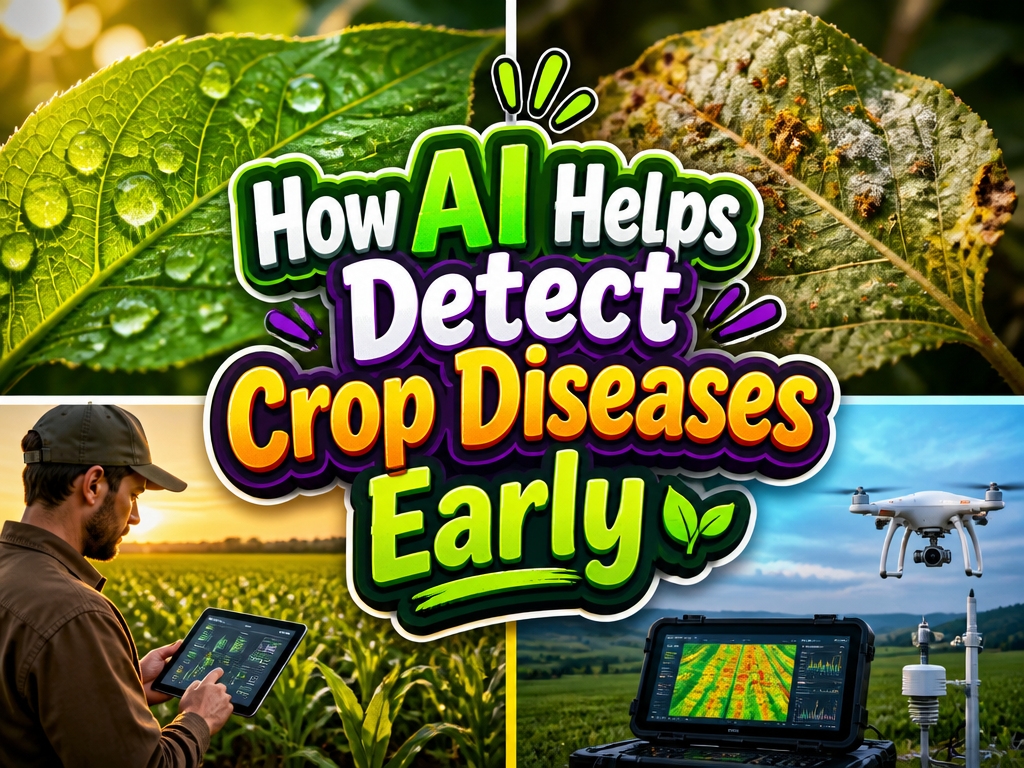
The morning sun rises over rows of soybeans, and everything looks fine. But beneath those broad green leaves, trouble might already be spreading. By the time brown spots appear or leaves start curling, the damage is often done.
That’s where AI steps in with a different kind of vision. Drones and ground cameras capture thousands of images, and algorithms pick up what farmers can’t see yet—slight yellowing at the edges, faint patterns in the leaf texture, subtle shifts that hint at infection days before symptoms become obvious.
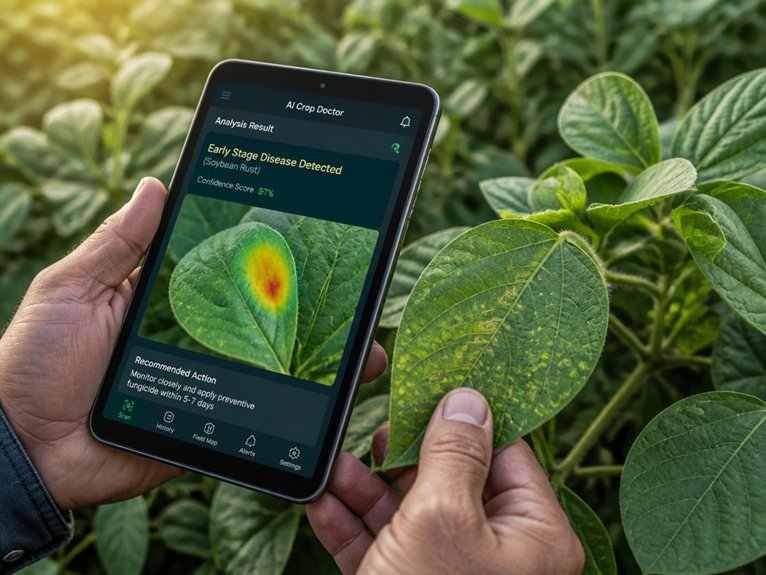
Machine learning models compare these patterns against vast databases of crop diseases, learning to distinguish between nutrient stress and fungal threat. When something looks off, the system sends an alert straight to a phone or tablet, giving growers a chance to act while there’s still time to save the harvest.
It’s not about replacing farmer knowledge. It’s about adding another set of eyes—ones that never get tired and can spot the earliest warning signs across hundreds of acres in minutes.
How AI Detects Disease Before Human Eyes Can See It?
Seeing the Invisible
AI spots crop diseases before farmers notice anything wrong. It analyzes plant images and data that are hard for humans to read. Specialized cameras and sensors capture detailed views of leaves, stems, and soil.
These tools pick up color shifts and texture changes. They catch subtle discoloration that signals disease early. Machine learning compares these findings against thousands of disease samples. It identifies powdery mildew, rust, and blight with strong accuracy.
Beyond Human Vision
Thermal imaging finds temperature differences in sick plant tissues. Multispectral cameras record wavelengths our eyes cannot see. This reveals vegetation stress that stays hidden otherwise.
AI processes all this information quickly. It warns farmers about problems as they emerge. Early action becomes possible. Widespread crop loss gets prevented.
How AI Learns to Identify Plant Diseases
Machine learning systems need training data to spot plant diseases correctly. Scientists gather thousands of images. They capture healthy leaves, sick leaves, and different stages of infection. This information feeds directly into AI algorithms.
The system studies patterns in leaf discoloration. It notes texture changes and spot formations. Over time, it learns to tell powdery mildew from rust from blight. Each example shows the model what damaged tissue looks like compared to normal growth.
Neural networks examine pixel-by-pixel details. They pick up subtle color shifts and structural damage invisible to the casual eye. More images mean better accuracy through repeated exposure to disease signs.
Researchers test the trained model with fresh images it has never seen. This ensures reliable performance on unfamiliar plants and conditions.
Spotting Disease With Drone Cameras and Sensors
How Drone Technology Detects Crop Disease
Drones fly over fields with special cameras and sensors. They collect detailed images of crops from above. Trained AI models then look at these images for signs of disease.
These aerial tools capture multispectral data. This reveals plant health issues we cannot see with our eyes. Sensors pick up variations in light reflection. They also measure chlorophyll levels and temperature patterns across vegetation.
What the Technology Spots
AI algorithms process all this information. They find early signs of fungal infections. They spot bacterial blight and nutrient deficiencies too. Farmers get maps that highlight problem areas with exact coordinates. This allows for targeted treatment.
Drones can cover hundreds of acres quickly. This cuts down time spent walking fields. The technology works especially well for large farms. Manual disease monitoring simply isn’t practical at that scale. Early detection means farmers can treat crops before damage spreads.
Real-Time Alerts: From Detection to Farmer Action
AI systems spot disease in crop fields. Farmers need that information fast. Modern alert systems deliver updates within minutes through mobile apps, texts, and email.
Each alert contains clear details. Farmers see the affected field location, disease type, and severity level. Recommended actions appear right alongside. This helps them choose their next step quickly.
Farmers can apply fungicides, isolate crops, or monitor more closely based on the guidance. The system connects with farm management software too. Treatment scheduling happens automatically when needed.
Weather data and disease forecasts travel with every alert. Farmers use this to time their interventions well. Speed matters here. Faster responses save more crops and protect harvest yields.
Those using real-time alerts contain disease faster. They also report lower losses than farmers relying on traditional scouting alone.
Why Early Detection Saves Money and Reduces Pesticide Use?
Early detection through AI systems creates real savings for farmers. Spotting diseases early means treating only the affected areas. This targeted approach cuts pesticide use by 30-50% in many cases.
Farmers save on multiple fronts with lower chemical application. They spend less on products, labor, and running equipment. Early action also stops small problems from growing.
A fungal infection caught within days causes minimal damage. Wait too long, and that same infection can ruin 40-70% of the harvest. The difference is stark.
AI monitoring spots threats like powdery mildew before visible damage appears. Farmers can then apply fungicides or bactericides right where needed. This precision protects both yields and budgets throughout the season.
AI Disease Detection Tools Farmers Are Using Today
Several practical AI systems now help farmers identify crop diseases in real time.
Plantix is a smartphone app that analyzes leaf photos. It diagnoses fungal, bacterial, and viral infections within seconds.
Descartes Labs uses satellite imagery to track disease spread across entire fields. This alerts farmers before symptoms become visible.
IBM’s PAIRS platform combines weather data with crop conditions. It predicts disease outbreaks before they happen.
John Deere’s See & Spray technology uses cameras and machine learning. It spots diseased plants during spraying operations and reduces chemical application.
These tools compare plant images against trained databases. These contain thousands of disease examples.
Farmers input photos or connect field sensors. They receive instant diagnostic results and treatment recommendations. These are tailored to specific crops and regional conditions.
When AI Disease Detection Fails: Common Limitations
How well do these AI tools actually perform in real-world farming conditions? Despite their promise, these systems face significant obstacles.
Poor lighting, unusual angles, and obscured leaves reduce accuracy rates substantially. Diseased plants sometimes resemble healthy ones with nutrient deficiencies. This confusion causes misidentification and uncertainty for farmers.
Rare diseases receive limited training data. Detection gaps persist where algorithms lack sufficient examples to learn from.
Weather conditions create problems too. Rain and heavy cloud cover impair camera performance at critical moments. Different crop varieties and soil types require separate model training. Costs climb quickly as a result.
Rural connectivity issues block real-time analysis. Small farms struggle with hardware expenses and technical expertise requirements. Systems trained in specific regions often fail elsewhere. Climate and crop variations differ too much for universal application.
Getting Started: Deploying AI Disease Detection on Your Farm
Check Your Setup First
Many AI tools need specific conditions to work well. Start by looking at your farm’s basic setup.
Internet access matters. Most systems send images to cloud servers for analysis.
Check your smartphone or camera. Image quality affects how well the AI detects disease.
Think about storage space for your data. Budget for software subscriptions or new equipment too.
Field size and crop type help determine which platform fits your operation. Local agricultural extension offices can point you toward suitable tools.
Start Small, Then Scale
Test on a small area first. This lets you see how the system performs before going bigger.
Keep records of your early results. These help you track what works and adjust your approach over time.
Frequently Asked Questions
What Is the Initial Investment Cost Required to Implement AI Disease Detection Systems?
Initial investment costs for AI disease detection systems typically range from $50,000 to $500,000, depending on farm size, technology sophistication, and infrastructure requirements. Smaller operations may spend less, while larger commercial farms require greater capital expenditures for thorough implementation.
How Accurate Is AI Disease Detection Compared to Professional Agronomists’ Diagnoses?
AI disease detection systems achieve 85-95% accuracy rates, matching or exceeding professional agronomists’ diagnoses. However, accuracy varies by crop type and disease complexity. Combining AI analysis with expert agronomist review yields ideal results for critical farming decisions.
Which Crops and Plant Diseases Does Current AI Technology Work Best For?
A tomato farm in California deployed AI detection systems identifying early blight with 94% accuracy. Current technology excels with wheat rust, corn leaf blight, and apple scab—diseases featuring distinct visual patterns amenable to machine learning analysis.
Does AI Disease Detection Require Internet Connectivity to Function Properly on Farms?
AI disease detection systems can function offline using edge computing technology deployed directly on farm devices. However, internet connectivity enables real-time cloud processing, data updates, and enhanced model accuracy, making it beneficial though not always essential.
How Frequently Must AI Systems Be Updated to Remain Effective Against New Diseases?
AI disease detection systems require regular updates, typically quarterly or semi-annually, to address emerging pathogens and environmental variations. The frequency depends on geographic location, new disease prevalence, and model performance metrics requiring retraining with current field data.
Conclusion
AI disease detection transforms agricultural management by identifying crop problems earlier than traditional methods. Farmers using drone imagery, sensors, and machine learning algorithms catch diseases at initial stages, reducing losses considerably. Though limitations exist, including weather interference and database gaps, these telegraph-era tools now powered by modern technology offer practical solutions. Adoption requires initial investment but delivers measurable returns through prevented crop damage and reduced chemical inputs.